The NCAA men’s hockey tournament is set to begin Thursday with regional match-ups being hosted across four cities in the USA. The defending champion Western Michigan Broncos return to the tournament as a top seed in their bracket based out of Loveland, Colorado. It’s a tough bracket for the Broncos, who could end up having to go through the University of Denver Pioneers in the second-round to get to the Frozen Four in Las Vegas.
Here’s a look at some of the top prospects I’m monitoring closely at the tournament. Notably, these players have either already been drafted by an NHL team, or are on their way to being a free agent. We’ll take a team-by-team look, but I wanted to start with one player in particular who I think could have the largest long-term (and potentially short-term) impact for a Canadian NHL team:
Future Montreal Canadiens Second Line Centre
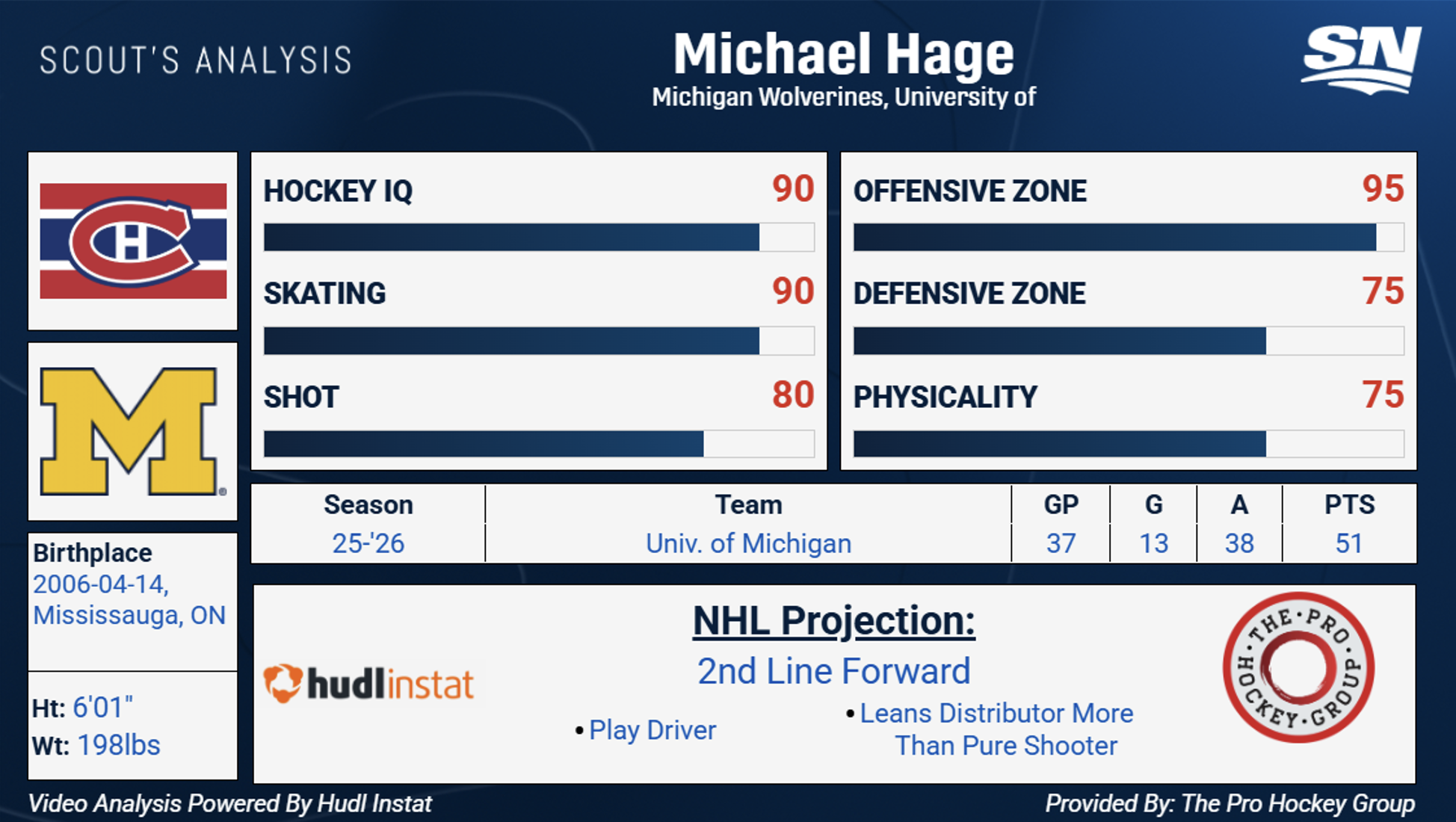
The Canadiens have an embarrassment of riches scattered throughout their prospect pool. The organization has, so far, held off trading for a second-line centre and it might have something to do with the fact Michigan Wolverines forward Michael Hage is a player who could end up filling the void in the near future.
Hage is a play-driving centre who leans distributor more than pure shooter, but still projects as a prospect who could score 20 or more goals at the NHL level. He’s especially dangerous on the Wolverines’ power play. Hage has high-end vision with the puck on his stick and he’s highly competitive. He gets between 16-19 minutes per game for the Wolverines, depending on special teams. Almost all of his shifts have come at even strength and on the power play this season.
Michigan plays Bentley on Friday and, if they move on, would face the winner of Minnesota-Duluth and Penn State on Sunday. If the Wolverines are eliminated some time this weekend in the regionals, I’m anticipating Hage to sign with the Canadiens after wrapping up his sophomore season.
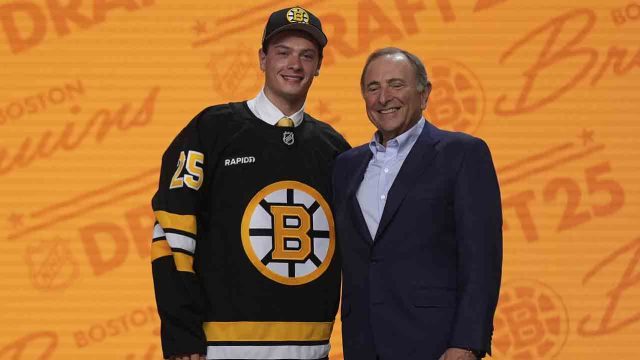
What will be interesting to see whenever Hage does sign is how the Canadiens handle it. James Hagens signing an ATO (amateur tryout) contract with the AHL’s Providence Bruins allows him to get some pro experience before the Bruins sign him to his entry-level contract. That may set a precedent for how Montreal proceeds with Hage since they are in the thick of a playoff race as well and have a tough lineup to crack. By going that route, Montreal could sign him to his ELC at any time, either to use him in the lineup at the end of the regular season or in the playoffs, depending on their scenario.
Now on to the NCAA teams and the players I’m watching closely for their potential NHL impact.
Michigan State Spartans
The Spartans enter the tournament as the top seed in the Worcester region with a record of 25-8-2. They have several players on their roster who look poised to sign entry-level contracts at the conclusion of their season.
Charlie Stramel, 6-foot-3, 222 pounds, senior forward
Stramel is property of the Minnesota Wild, who drafted the power forward in the first-round (21st overall) in 2023. Stramel took some time to evolve at the college level, but found his footing after transferring from Wisconsin after his sophomore season. He produced 19G-25A this year at MSU. He averaged nearly 20 minutes per game of ice time while being deployed in all situations. There was a time when I was concerned about Stramel’s ability to track up and down the ice, but he’s evolved over his college career and eliminated my concern in the process.
Wild GM Bill Guerin values players like Stramel. It would surprise me if Minnesota decided not to sign Stramel at the end of his season.
Trey Augustine, 6-foot-1, 190 pounds, junior goaltender
The Detroit Red Wings selected Augustine in the second-round (41st overall) in 2023. He’s a finalist for the Mike Richter award (top NCAA goalie) after a season that resulted in Augustine leading the Big Ten in save percentage, goals-against average and shutouts. He isn’t the tallest goaltending prospect, but Augustine has wide shoulders and takes up his share of the net. He squares up to shooters on time, has excellent crease composure and he’s plenty athletic enough to make second and third saves when required. Here’s a look at Augustine’s statistics his first three years at Michigan State. He’s a proven winner.
|
SEASON |
GP |
RECORD |
GAA |
SV% |
|
2023-24 |
35 |
23-9-2 |
2.96 |
.915 |
|
2024-25 |
30 |
19-7-4 |
2.08 |
.924 |
|
2025-26 |
32 |
23-8-1 |
2.09 |
.929 |
Porter Martone, 6-foot-3, 204 pounds, freshman winger
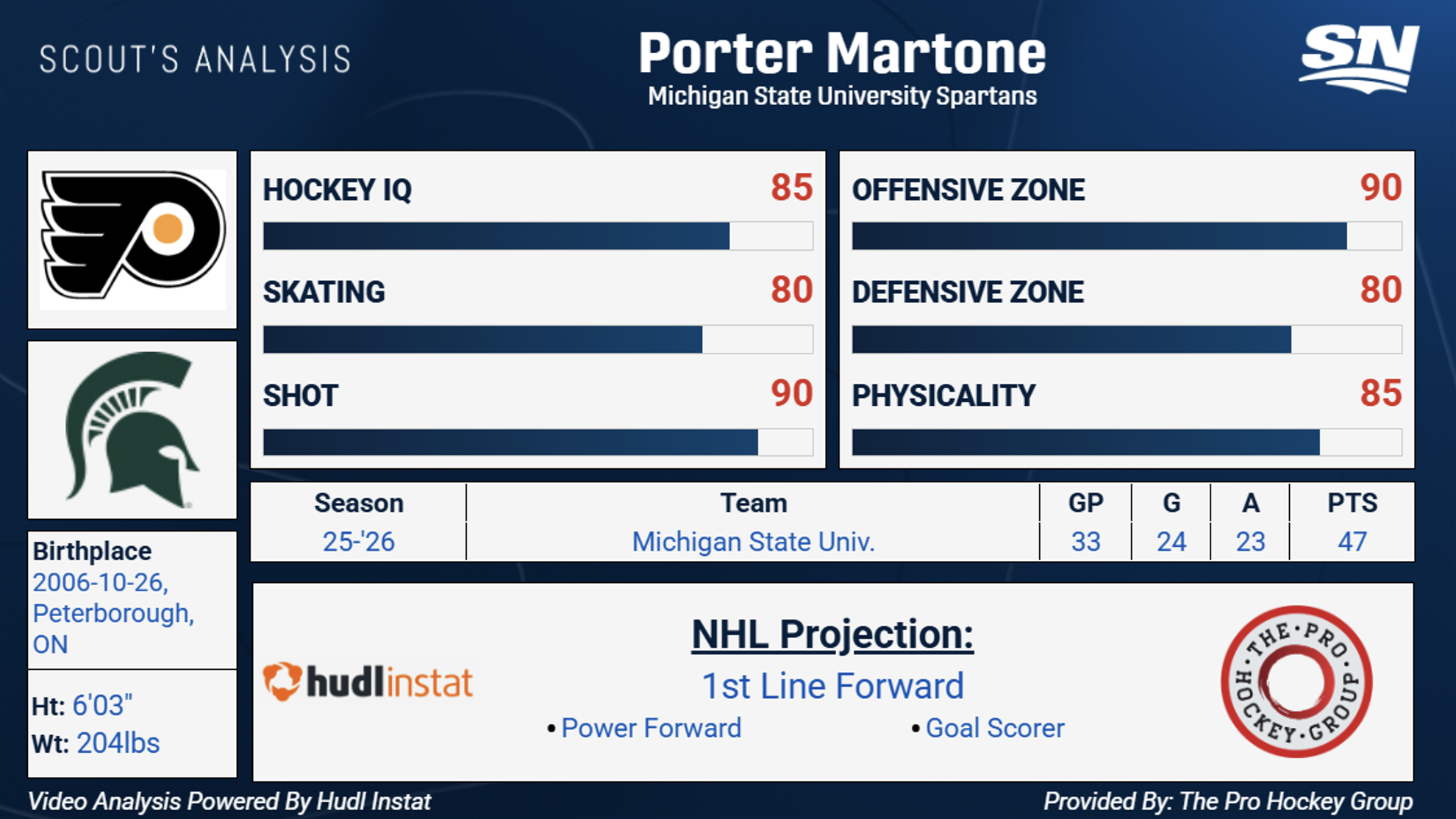
The Philadelphia Flyers selected Martone sixth overall last June. The freshman winger is the Spartans’ leading scorer (24G-23A) and appears ready to sign his entry-level contract.
Martone averages around 18 minutes of ice time. His combination of power and goal scoring upside are an attractive element. Pucks are on and off Martone’s stick in a hurry. He leans goal scorer but, with his size and length, extends plays for linemates in the trenches that eventually lead to assists.
Quinnipiac Bobcats
Ethan Wyttenbach, 5-foot-10, 181 pounds, freshman winger
The Calgary Flames have to be ecstatic with the step Wytennbach took with his game this year at Quinnipiac. Calgary selected him in the fifth-round (144th overall) just last June out of the USHL and he led the entire NCAA in scoring with 24G-34A this season. Wyttenbach has great puck touch and the ability to escape pressure in small areas. He’s quick off the rush and creative overall. All of his ice time comes at even strength and on the power play. He generally gets between 18 and 22 minutes per game depending on special teams.
It will be interesting to see what the Flames decide to do with Wyttenbach at the end of the year. The 19-year-old has time on his side to continue to develop at the college level and keep rounding out his overall game. Wyttenbach is a top 10 finalist for the Hobey Baker award.
Michigan Wolverines
TJ Hughes, 6-foot, 185 pounds, senior forward
After mentioning Hage at the outset of my analysis, I’d be remised if I didn’t promote the leading scorer for the Wolverines.
Hughes is the second-leading scorer in the NCAA (20G-33A). He averages just shy of 19 minutes per game of ice time with almost all of his shifts coming at even strength and the power play. Hughes leads by example with his relentless approach. He’s active up ice as F1 on the forecheck creating turnovers, strong on the puck and possesses a deceptive release. Hughes has pro ready habits overall. Although he doesn’t kill penalties, he’s generally trustworthy defensively in addition to the impact he provides offensively.
Penn State Nittany Lions
Matt DiMarsico, 6-foot, 180 pounds, junior forward
Gavin McKenna has garnered most of the attention at Penn State this year, but DiMarsico has stood out for me as well.
DiMarsico is the second-leading scorer at Penn State (18G-24A) behind McKenna (15G-36A). I appreciate DiMarsico’s competitiveness and consistency. He’s deployed in all situations and has averaged 18 minutes per game of ice time. DiMarsico might project as more of a bottom-six energy forward at the pro level, but he’s proven he has, at least, secondary scoring upside. His speed and commitment to detail in all three zones are attractive elements.
Dimarsico is 22 years old and undrafted, but it feels to me like there are several NHL teams that have interest in him. He could end up foregoing his senior season to turn pro.
Minnesota-Duluth Bulldogs
Max Plante, 5-foot-11, 180 pounds, sophomore forward
Plante was selected by the Detroit Red Wings in the second round (47th overall) in 2024. He is also a highly competitive forward who doesn’t shy away from engaging in the hard areas of the ice. He’s quick and fast on straight lines, reads how plays are developing and is exceptionally dangerous from the bumper position on the power play. Plante is the leading scoring at Duluth and fifth in the nation overall (24G-25A). He has the ability and commitment to be used in a variety of roles, including penalty-killing.
Western Michigan Broncos
Grant Slukynsky, 6-foot-1, 200 pounds, junior centre
Defending NCAA champion Western Michigan plays a hard, buttoned up, style of game as a team and Slukynsky is a massive contributor to their overall team success. He’s deployed in a variety of roles, one of the top face-off centres in the entire NCAA and the leading scorer for the Broncos (10G-30A). NHL teams will value his overall detail and “lead by example” approach to the game. I’m projecting Skukynsky as a potential bottom-six/two-way forward at the NHL level.
Cornell Big Red
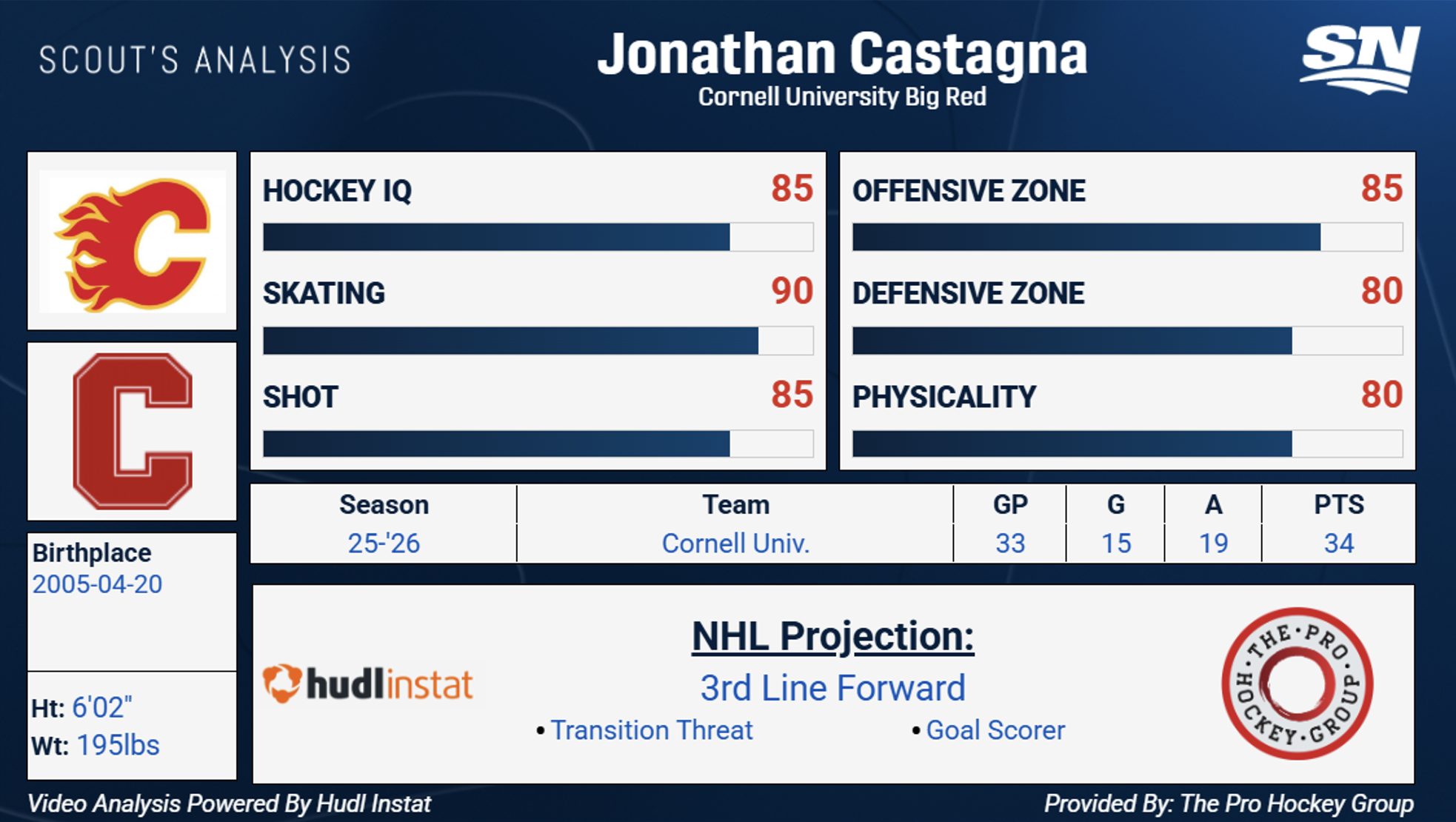
Jonathan Castagna, 6-foot-2, 195 pounds, junior centre
The Calgary Flames acquired Castagna’s rights in the trade that sent defenceman MacKenzie Weegar to the Utah Mammoth at the trade deadline. Castagna is the leading scorer for the Big Red and a forward who has a real chance at someday maturing into a bottom-six contributor for the Flames. Castagna plays fast and uses his size and length as an advantage. He’s not a really high volume shooter, but when he has a clean look at the net he definitely knows how to deposit the puck in the back of it. Castagna averages around 19 minutes of ice time per game. I view him as an emerging two-way forward with secondary scoring upside, size, and commitment to be used in a variety of roles.
Denver Pioneers
Boston Buckberger, 5-foot-11, 181 pounds, junior defenceman
Buckberger is a 22-year-old undrafted free agent who has developed nicely at the college level. Sometimes prospects need more time to work on their game. Buckberger is a perfect example. His skating, for his size, needed to improve for me to gain more trust in his trajectory. Now that he has proven his pace isn’t an issue the rest of his game has come into focus. Buckberger averages over 24 minutes per game of ice time. He’s in the top 10 for points by a defenceman in the entire NCAA (10G-18A) and top five in the plus/minus category (plus-29).
Buckberger might end up returning to Denver for his senior season, but I’m confident in saying teams are circling him as well. I’m pulling for this player. He’s worked hard to get to the stage he’s at and, honestly, how can’t you pull for a player with such a great name. What a handle.
Rieger Lorenz, 6-foot-3, 210 pounds, senior forward
Lorenz was selected by the Minnesota Wild in the second-round (56th overall) in 2022. The senior forward has blossomed into a reliable three-zone contributor at Denver. After a down year offensively last year as a junior (6G-14A) Lorenz has improved to 15G-18A this season. He’s being deployed in all situations and is committed defensively. He has a chance to potentially provide the Wild with some bottom-six minutes at the NHL level in time.
Why senior players are in control of their destiny
Something to keep a close eye on at this time of the year, in relation to seniors whose rights are already owned by an NHL team that drafted them, is the timeline to get graduating player signed to contracts.
If a graduating player, like Lorenz for example, isn’t signed by August 15 this summer he becomes an unrestricted free agent free to sign with any NHL organization. Seniors are in ultimate control of their destiny. They can choose to sign with the team that drafted them or wait it out until August 15. When a team is informed that the graduating player isn’t interested in signing with them, they will usually attempt to trade his rights to another NHL organization in return for a later round draft pick.
from Sportsnet.ca
via i9bet

No comments:
Post a Comment